Shri Bhuvaneshvari Foundation is dedicated to establishing Bhuwvaneshwari Pathshalas that merge traditional Indian knowledge systems with modern technologies. Our schools nurture holistic development, preserving the rich heritage of Bharat while preparing students for the future.
At Bhuwvaneshvari Pathshalas, education goes beyond books. Our aim is to develop well-rounded individuals by nurturing intellectual, emotional, and spiritual growth. By teaching moral values alongside academics, we ensure that every child grows into a responsible and compassionate individual, ready to contribute meaningfully to society.
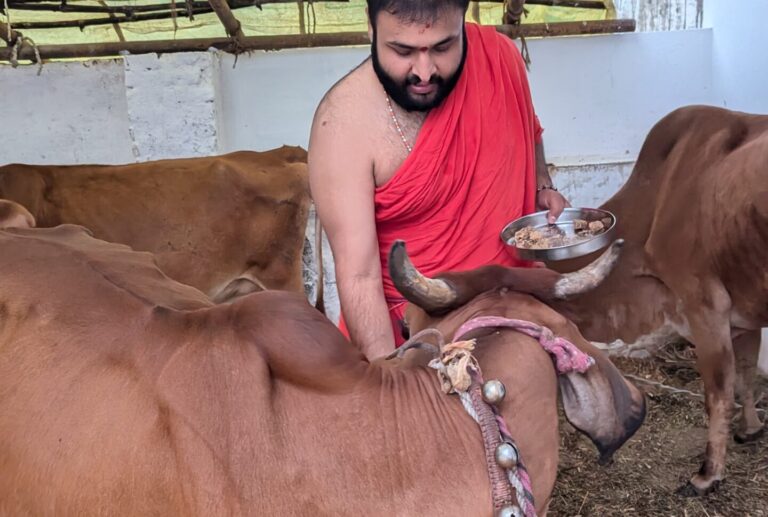
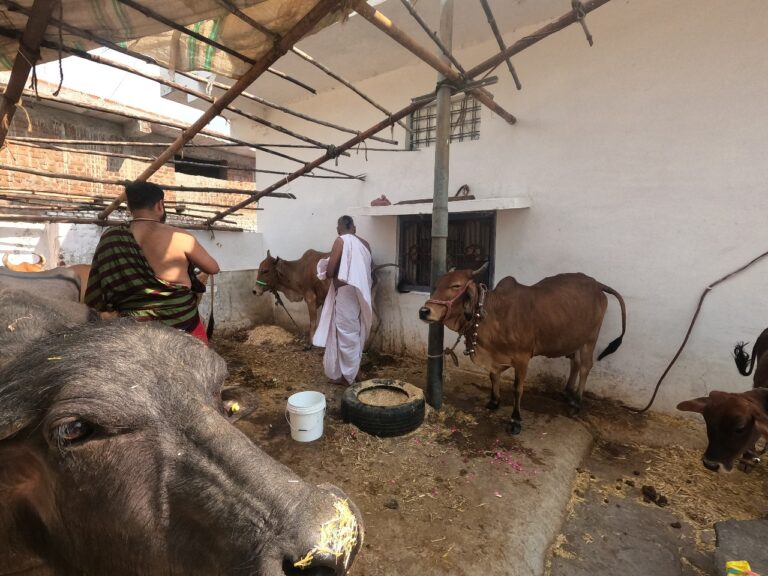
Indigenous Indian cows hold a vital place in our cultural and ecological heritage. Through Gauseva, we are committed to protecting these sacred creatures, ensuring their health, wellbeing, and survival. By supporting this cause, you contribute to conserving a heritage that benefits our agriculture, environment, and traditions.
Our unique schooling system merges the richness of Indian knowledge traditions with modern technology. This approach equips students with the tools to excel in today’s world while staying deeply connected to their cultural identity, enabling them to proudly carry forward the legacy of Bharat.
The Gurukula system once preserved the essence of Sanatana Dharma, shaping lives rooted in wisdom, balance, and spiritual growth. By blending ancient traditions with modern learning, we aim to nurture future GURUS who will lead with knowledge, vision, and purpose.
Our schools aim to instill pride in India’s rich heritage and culture, ensuring that every student understands the importance of their roots. With a curriculum that celebrates tradition while fostering critical thinking, we empower students to build a brighter future grounded in cultural wisdom.
Shri Bhuvaneshvari Foundation is dedicated to establishing Bhuwvaneshwari Pathshalas that merge traditional Indian knowledge systems with modern technologies. Our schools nurture holistic development, preserving the rich heritage of Bharat while preparing students for the future.
At Bhuwvaneshvari Pathshalas, education goes beyond books. Our aim is to develop well-rounded individuals by nurturing intellectual, emotional, and spiritual growth. By teaching moral values alongside academics, we ensure that every child grows into a responsible and compassionate individual, ready to contribute meaningfully to society.
Indigenous Indian cows hold a vital place in our cultural and ecological heritage. Through Gauseva, we are committed to protecting these sacred creatures, ensuring their health, wellbeing, and survival. By supporting this cause, you contribute to conserving a heritage that benefits our agriculture, environment, and traditions.
Our unique schooling system merges the richness of Indian knowledge traditions with modern technology. This approach equips students with the tools to excel in today’s world while staying deeply connected to their cultural identity, enabling them to proudly carry forward the legacy of Bharat.
The Gurukula system once preserved the essence of Sanatana Dharma, shaping lives rooted in wisdom, balance, and spiritual growth. By blending ancient traditions with modern learning, we aim to nurture future GURUS who will lead with knowledge, vision, and purpose.
Our schools aim to instill pride in India’s rich heritage and culture, ensuring that every student understands the importance of their roots. With a curriculum that celebrates tradition while fostering critical thinking, we empower students to build a brighter future grounded in cultural wisdom.
At Bhuwwaneshvari Pathshalas, we nurture intellectual, emotional, and spiritual growth, fostering responsible, compassionate individuals ready to shape society.
In our region (Village Ramgadi, Chhindwara, MP), Navarātri isn’t just a festival—it’s a saṅkalpa, a living rhythm that the whole village breathes together. Weeks before the first ghaṇṭā rings, homes are scrubbed clean, courtyards washed, and the air fills with the scent of gomay and neem. On Day 1, with hearts as fresh as our verandas, we begin vrat—simple, sāttvik living for nine nights: only phal and dugdha, no frying even at home, and a quiet promise to keep the mind lucid for pūjā and ārati performed twice daily at the feet of our Kuladevī.
That evening, all families gather at her sacred sthān. Clay is brought from our own fields—śuddha mṛttikā that has seen rain, sun, and seed—and there, we sow jāware, tender barley shoots that grow with our devotion. Alongside, the akhaṇḍa deepa is lit inside the kalash, marking the presence of the Devi for nine continuous nights and days. From this moment on, the house runs on her time.
Every evening, after the lamps are lit and puṣpa offered, the village echoes with jāgāraṇ—our local songs of the Devīs known as “jās”, sung not from books but from memory. These are stories we’ve heard on laps of grandmothers, sung while grinding grain, whispered during storms. They speak of the Devī’s courage, protection, and grace—sometimes fierce, sometimes playful, always near.
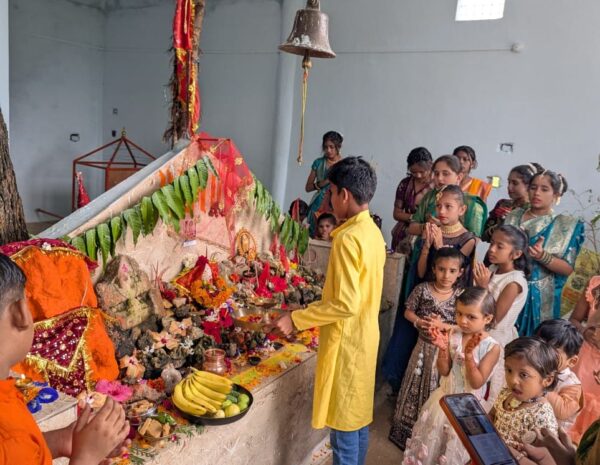
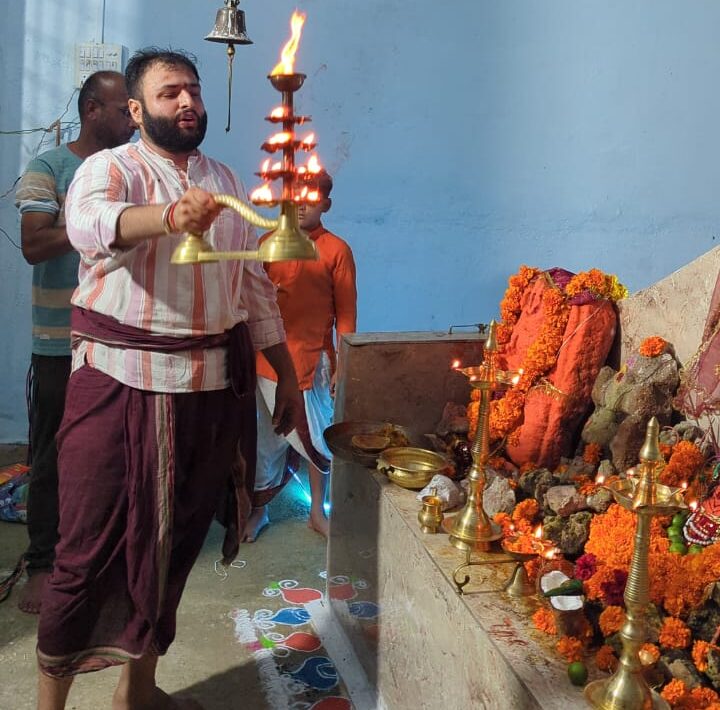
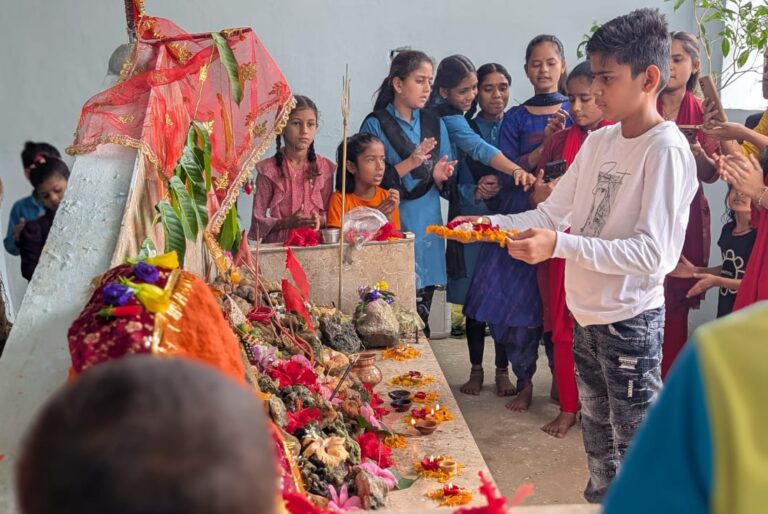
At our Pāṭhaśālā too, Navarātri was celebrated not as an event, but as a seva. It began on Mahālaya Amāvasyā with a session by Sri Aniruddha Patel on the significance of Navarātri, its rituals, and the forms of Shakti. Each morning, students decorated the shrine of our Grāmadevatā—Khedāpātī Māta—with flowers, turmeric, rangolī, and fresh leaves. After pūjā, we would all sing the ārati together, our voices rising with the smoke of dhūpa.
The rest of the evenings were spent in visiting different temples in the village. With dhol, nāgāḍā, and full enthusiasm, we offered ārati at a new māta sthala each day. These weren’t just visits—they were our way of weaving the village together in devotion.
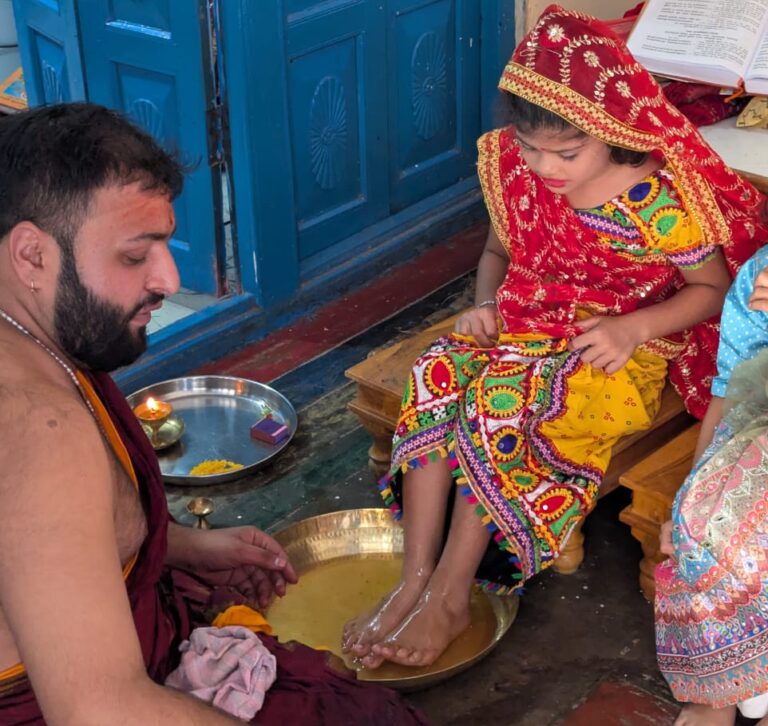
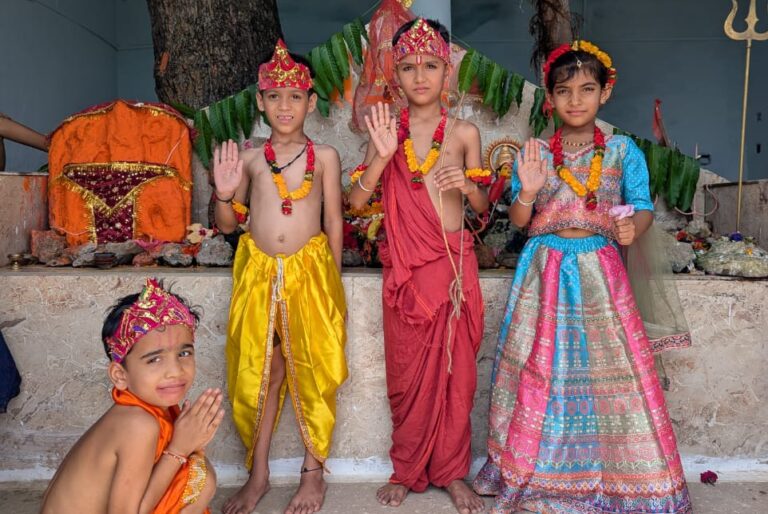
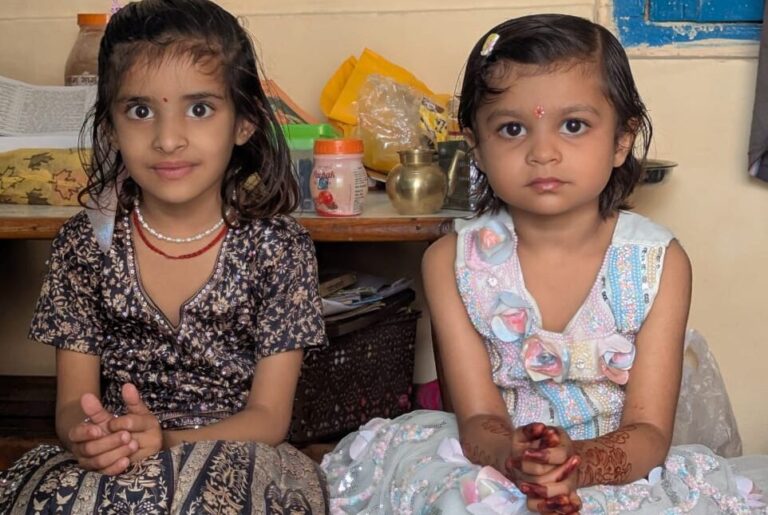
On Mahāpañcamī, Kanyā Pūjan was held. Little girls, dressed in traditional clothes, their foreheads marked with kumkum, were worshipped as forms of the Devī. On Daśaharā, children of the Pāṭhaśālā performed a short Rāmlīlā, followed by Rāvaṇ Dahan. That evening, Suhāsinī Pūjā was also performed—an honour to the married women who carry auspiciousness in their presence.
But it is Mahāṣṭamī that brings something beyond words. On this day, the naivedya is prepared with the highest purity. During the ārati, as the conch sounds and lamps move in circles, there are times when the Devī chooses to speak. Just like in the Bhūta Kola tradition seen in the film Kantara, here too, the Devi manifests through someone in the family. Her voice changes. Her eyes do not blink. She speaks of what is to come—blessings, warnings, guidance. There is no doubt in that moment: the Devī is present.
On Mahānavamī, the jāware are taken in a vibrant procession for visarjan, carried on heads, accompanied by drums, chants, and tears of farewell. That night, the fast is broken—first by offering the prepared meal as prasāda, then by all of us partaking it together, quietly, with gratitude.
The celebration doesn’t end there. On Sharad Pūrṇimā, the village gathers one last time at Khedāpātī Māta Mandir. The temple is beautifully lit. Abhiṣeka, ārchanā, and a grand mahāratī take place. Every family brings food cooked with devotion. After offering it to the Devī, everyone eats together—elders, children, neighbours. Stories are exchanged. Jās are sung one last time. There is no stage, no announcement—just people, devotion, and the Goddess.
Navarātri in our village is not a program or a checklist. It is how we remember who we are. It is how we walk together—kul and grāma, guru and śiṣya, elder and child—under the gaze of the Devī. In these nine days, time itself feels sacred. And in the hearts of those who participate, the rhythm of Shakti continues long after the jāware have been immersed.
Jai Mā Durgā. Jai Khedāpātī Māta. Navarātri ki hṛdaypūrṇ śubh-kāmanāyen.